Settings
 Fast Delivery
 Free Shipping
 Incoterms
 Payment Types


 Marketplace Product


Optimization Solutions for Current Carrying and Heat Dissipation
Product Overview: Beyond Conductivity - The Core Connection Component
As a fundamental current transmission component in electrical systems, the busbar—also referred to as a current-carrying bar or bus bar—is manufactured from highly conductive metals, primarily T2 copper, through precision machining and multiple protective treatments. Available in strip, plate, or bar configurations, its core function is to establish low-impedance pathways between electrical components, thereby enabling efficient current transmission and optimized heat dissipation.
Unlike conventional wires, the busbar employs a surface-contact design that effectively minimizes contact resistance, reducing voltage drop and power loss. It delivers significant advancements in electrical conductivity, heat dissipation, and structural stability, making it a superior alternative to traditional wiring and standard current-carrying components, while offering enhanced resistance to vibration and mechanical shock.
Engineered for high-current, high-reliability applications, the busbar stands as the ideal conductive bridge across industrial equipment, automotive electronics, power systems, and beyond.
 SMT busbar examples. (Image source: Milliohm Electronics)
Core Advantages: Highlights for Efficient Applications
Ultimate Conductivity & Current-Carrying Capacity
- T2 copper, 99.90%+ purity
- Resistivity as low as 0.0172 Ω·m, conductivity up to 101% IACS
- Far outperforms brass, aluminum, and other conventional materials
- Minimizes power transmission loss
- Significantly higher current capacity than PCB copper traces
- Customizable width & thickness for applications from a few amps to hundreds of amps
- Ideal for high-power equipment power supply
Optimized Temperature Rise & Efficient Heat Dissipation
- Copper thermal conductivity: 391 W/(m·K)
- Scientific structural design for rapid heat conduction
- Enhanced natural cooling via increased air contact area
- Compatible with forced air cooling & liquid cooling systems
- Proven result: 24°C temperature rise reduction in 6-layer PCB applications
- Extends equipment lifespan and prevents heat-induced performance degradation
Precision Fabrication & Robust Protection
- Surface Treatment: Electroplating processes—including nickel, tin, and chrome plating—are applied to form a dense protective layer that significantly enhances oxidation resistance, corrosion resistance, and solderability, ensuring long-term reliability in diverse operating environments.
- Dimensional Accuracy Control: A rigorous two-stage process employing a 180° leveling machine followed by precision dimensional inspection ensures exceptional product flatness. This eliminates the risk of cold solder joints and localized overheating, thereby substantially improving installation reliability.
- Cleaning Treatment: Ultrasonic cleaning combined with magnetic polishing effectively removes surface burrs and metallic particulates. This not only reduces operational risks but also achieves an optimal balance of structural aesthetics and functional practicality.
- Packaging Assurance: Tape-and-reel packaging is adopted to provide comprehensive protection against moisture, dust, and electrostatic discharge. It facilitates seamless integration with automated SMT assembly lines while minimizing the potential for damage during transportation.
Flexible Customization & Application Adaptability
A wide range of structural designs are supported, including SMT flat type, SMT jumper type, lacquer-coated/encapsulated SMT type, and through-hole jumper type. Dimensions are adjustable according to specific requirements, with thickness ranging from 0.3 mm to 4 mm, width from 0.8 mm to 20 mm, and length from 2 mm to 70 mm. Customized configurations—such as perforated designs or "Ω"-shaped (arch-shaped) profiles—are also available upon request.
The product operates reliably across a temperature range of -55°C to +170°C and complies with both ROHS and halogen-free requirements, making it suitable for installation and use in diverse environmental conditions.
 In this typical application example, there is reduction in temperature rise of about 24˚C (before on the left, after on the right) by using two rectangular bus bars. (Image source: Milliohm Electronics)
Application Scenarios & Selection Guidelines
Core Application Areas
- Automotive / New Energy: Fast-charging piles, charging modules, power battery circuits, and motor controllers — meeting the demands of high-current transmission and heat dissipation
- Industrial Equipment: Variable frequency drives (VFDs), uninterruptible power supplies (UPS), industrial motor drive systems, and servo drives — ensuring stable operation and overload protection
- Power Systems: Substation equipment connections, photovoltaic inverters, and wind power converters — enabling high-voltage current collection and distribution
- Electronic Equipment: High-density power supply modules, PCB jumper connections, and communication base station power cabinets — optimizing circuit layout and current transmission efficiency
Key Selection Guidelines
- Current-Carrying Requirements: Determine the copper thickness and width of the busbar based on the actual operating current in accordance with the IPC-2152 standard, ensuring long-term operational reliability.
- Mounting Configuration: Select according to application needs—SMT type for automated assembly, through-hole type for flexible PCB layout, and jumper type for enhanced heat dissipation.
- Environmental Adaptability: For high-temperature or humid environments, nickel-plated or chrome-plated versions are recommended. For applications requiring high insulation, encapsulated or lacquer-coated products are preferable.
- Structural Design: Minimize busbar length to prevent PCB warpage. Employ staggered or chain-type arrangements to achieve uniform distribution of current-induced stress.
Summary and Conclusion
With its core strengths of low resistance, high efficiency, reliability, and customization, the busbar offers comprehensive current transmission and thermal management solutions for a wide range of industries— enabled by fully integrated in-house manufacturing and strict quality control. Milliohm Electronics parts are available at DigiKey.
About this author

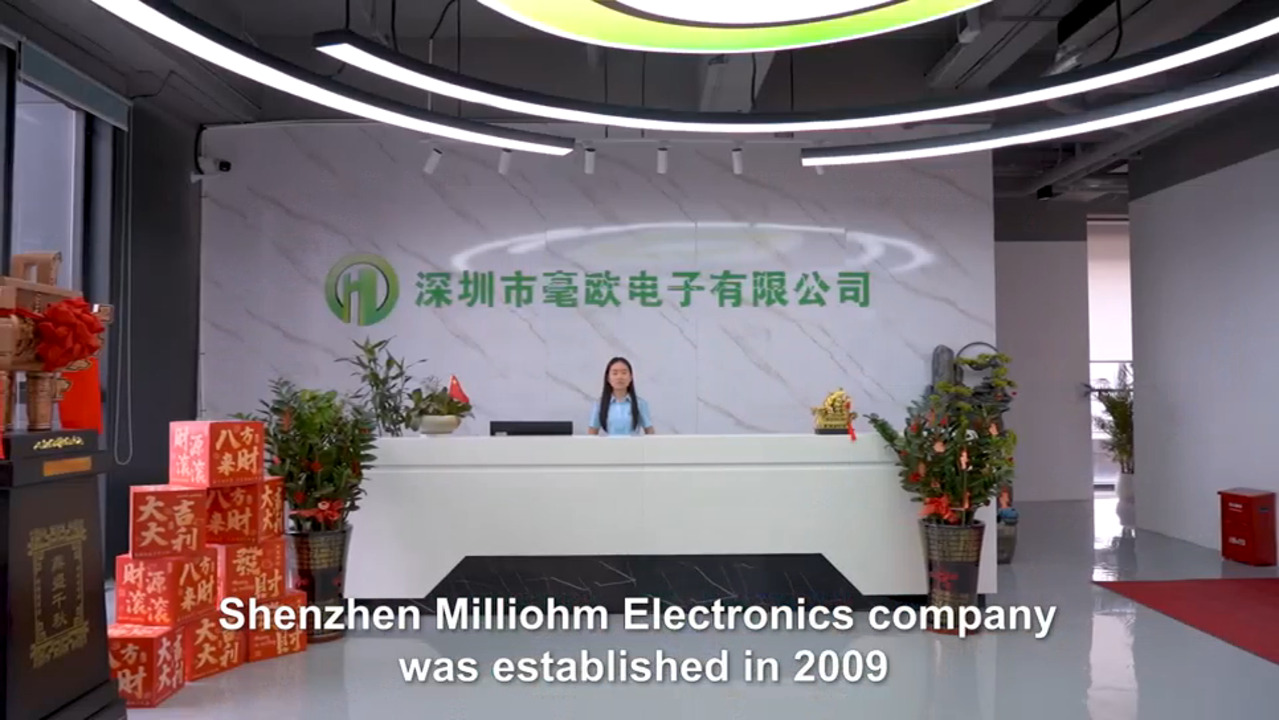
Shenzhen Milliohm Electronic established in 2009,is a national high-tech enterprise. We boasts advanced resistor production equipment,electron beam welding lines and technology, capable of mass-welding alloy materials ranging from 0.1 mm to 4 mm. We operates four factories in Foshan,Anhui,Suzhou and Zhongshan,with a total production area exceeding 20,000m². Our products are widely used in industries including automotive electronics,industrial equipment,telecommunications,rail transportation,power and BMS,home appliances,metering and measuring instruments,medical devices,and consumer electronics.

Have questions or comments? Continue the conversation on TechForum, DigiKey's online community and technical resource.
Visit TechForumMore Blogs from this Author